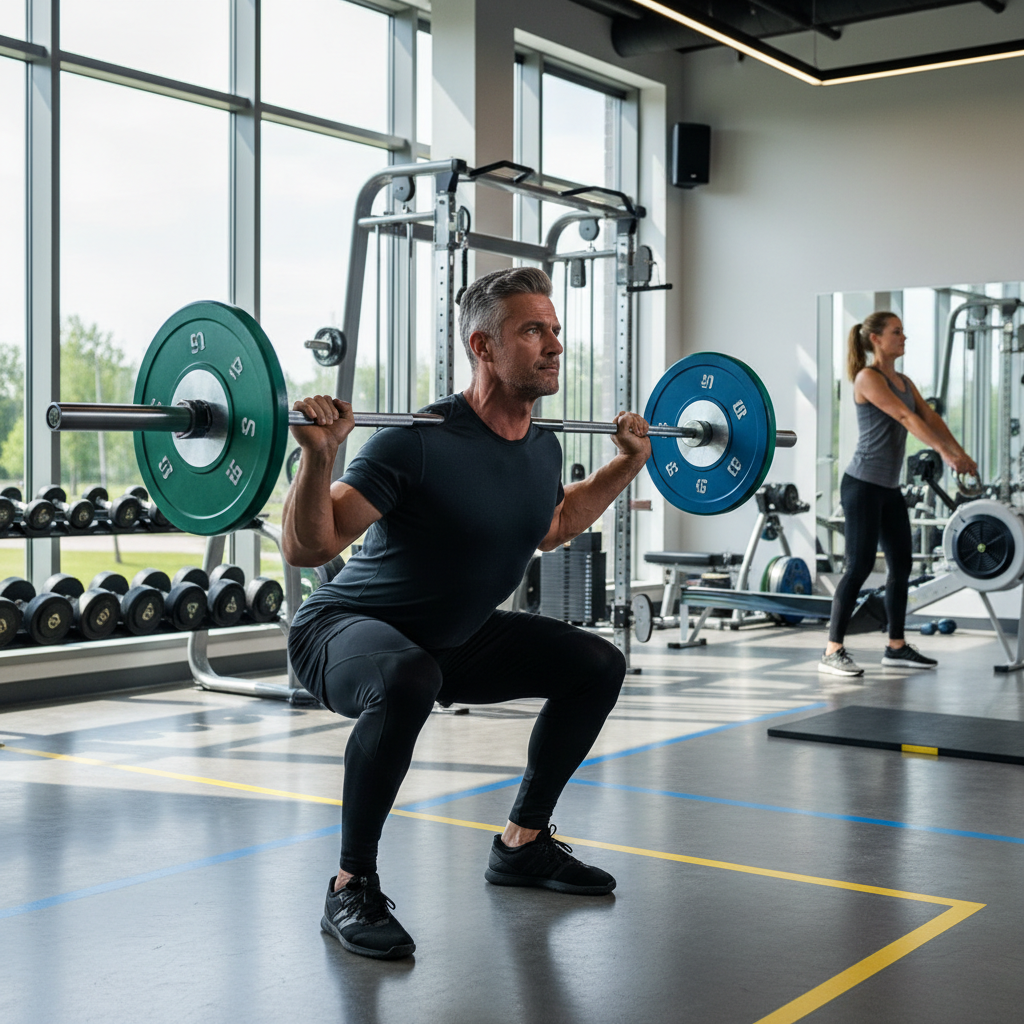
After the age of 40, three things start happening whether you like it or not: muscle mass declines (sarcopenia), bone density drops, and tissue quality changes. The good news — and this is backed by every serious longevity study of the last 15 years — is that the right training does not just slow this process. It reverses most of it.
I am 50. I train using the exact framework I'm about to share. So do the adults I coach. This is not theory.
Priority #1 — Heavy(ish) Strength Training
The single most important shift after 40 is committing to real resistance training at challenging loads. Light pink-dumbbell circuits will not protect your muscle, your bones, or your independence in 20 years. You need:
- 2–3 strength sessions per week
- Compound movements: squats, hinges (deadlift variations), presses, rows, carries
- Real intensity: working in the 5–10 rep range with sets that genuinely challenge you
Track your numbers honestly with the One Rep Max Calculator so progressive overload is measurable, not guessed.
Priority #2 — Hip and Thoracic Mobility
The two areas that silently destroy quality of life after 40 are the hips and the upper back (thoracic spine). Stiff hips ruin squats, ruin running, and accelerate low back pain. A locked thoracic spine destroys posture and shoulder health. Daily mobility work — even 5 minutes — is non-negotiable. Use our mobility workouts from the workout library.
Priority #3 — Single-Leg and Balance Work
Falls are the leading cause of serious injury in adults over 60 — and the decline begins in the 40s. Split squats, step-ups, single-leg deadlifts and balance drills are not optional. They protect knees and hips and they build neurological control that does not come from machines.
Priority #4 — Cardiovascular Conditioning (the Smart Way)
You need cardio, but not the way 25-year-olds do it. The proven formula for adults over 40 is:
- 2–3 sessions of Zone 2 cardio (30–45 min of conversational pace) for mitochondrial and heart health
- 1 short, intelligent high-intensity session per week — intervals, not all-out destruction
This is the protocol used in nearly every credible longevity research model today.
Priority #5 — Soft Tissue and Recovery
After 40, recovery is the real bottleneck. Train hard, then recover seriously: 7+ hours of sleep, foam rolling, breathing work, and at least one true recovery day per week. Skipping recovery is what causes the "I'm just too old to train hard" myth.
Structured Programs Beat Random Workouts
Adults over 40 respond best to structured periodization, not random workouts. Our training programs are built around exactly this philosophy: progressive strength, intelligent conditioning, mandatory mobility, and recovery days that are actually planned.
Nutrition Is Half the Equation
Muscle protein synthesis becomes less efficient with age. You need more protein, not less — roughly 1.6–2.2 g per kg of bodyweight. Use the Calorie Calculator and BMR Calculator to set real targets instead of guessing.
The Honest Truth
Aging is not optional. How you age is. The 60-year-old who can squat, hinge, carry, and walk uphill without pain did not get lucky — they trained for it. Start now, train intelligently, and the next 30 years of your body will be radically better than the average.
Before starting a new program after 40, please review our health disclaimer and PAR-Q screening.