Calisthenics vs. Weight Training: Which Fits Your Goals?
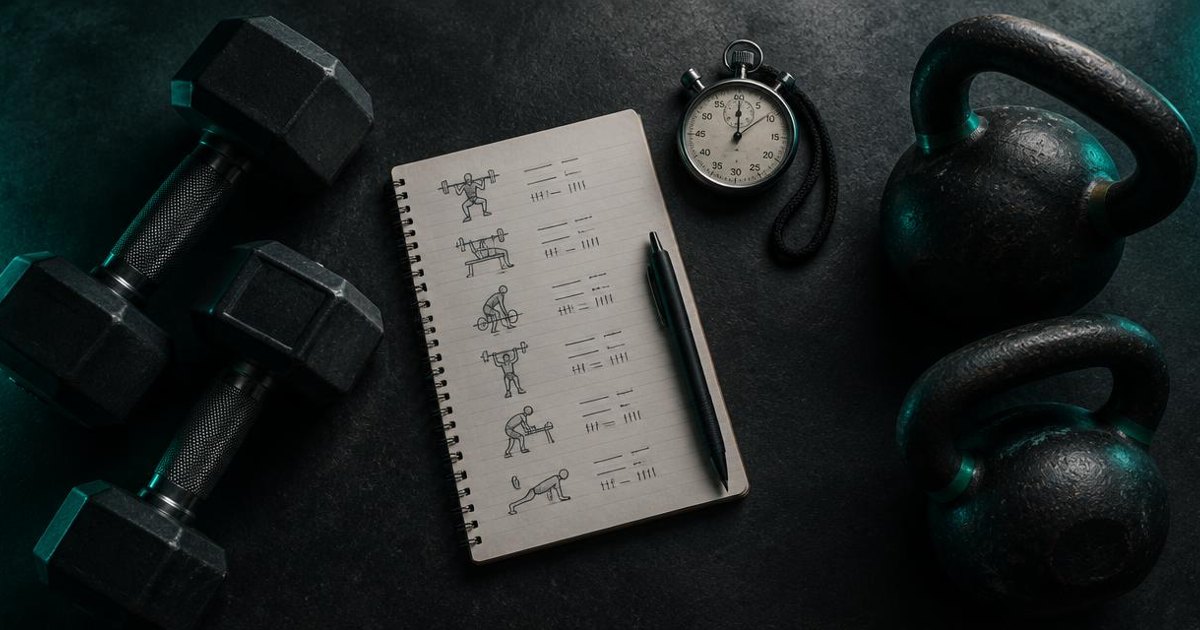
Calisthenics and weight training are both forms of resistance training. One mainly uses your bodyweight; the other uses external resistance such as dumbbells, barbells, cables or machines. Both can improve strength and build muscle when the exercises are challenging enough and progress over time. The useful question is not which method wins online. It is which method lets you train your goals consistently.
What counts as calisthenics?
Push-ups, squats and pull-ups are familiar examples. Bodyweight does not mean equipment-free: a safe bar or suitable support may be needed for pulling exercises. Weight training offers external resistance that you can usually adjust in small increments. A sensible programme may use both.
Can bodyweight training build muscle?
Yes, but the challenge needs to match your ability. A small eight-week study in young men compared push-ups with low-load bench presses at a similar relative load. Both groups improved chest and triceps muscle thickness and bench-press strength. It supports push-ups as a useful training option; it does not prove that every bodyweight exercise equals every weighted exercise for every person.
Once an exercise becomes easy, repeating the same comfortable set indefinitely is unlikely to keep providing the same stimulus. You need a progression that remains safe, measurable and suitable for the muscle you are training.
How progression differs
With weights, you can often add a small amount of resistance while keeping the movement almost unchanged. With calisthenics, you may increase repetitions, change leverage or move to a more demanding variation. A hands-elevated push-up, for example, can progress towards a floor push-up as your ability develops.
The trade-off is that a harder bodyweight variation may require more balance or skill, not just more force. Do not assume a technically impressive movement is the best way to train a specific muscle. Choose progressions you can control rather than rushing into advanced skills.
Where weights are especially practical
External resistance can make it easier to load strong muscle groups, particularly the legs, and to make small, repeatable increases. If your goal is a heavier barbell lift, you will also need appropriate practice with that lift. Strength is partly specific to the task.
Machines are not automatically inferior to free weights. Equipment choice depends on the movement, your experience and what you can perform comfortably. The review of time-efficient resistance training recognises both machines and free weights as useful options depending on goals and availability.
Where calisthenics is especially practical
Bodyweight sessions are convenient when you travel or have limited space. They can reduce the friction between deciding to train and actually starting. However, a balanced session still needs attention to the muscles and movements being trained. A collection of push-ups and squats may leave pulling work underrepresented.
Choose based on your situation
- Limited equipment: use bodyweight exercises that can be scaled to your current ability.
- Specific lifting goals: prioritise appropriate practice with external loads.
- Muscle-building goals: choose resistance that makes the target muscles work hard with good control.
- Changing schedules: combine methods rather than missing sessions because your preferred equipment is unavailable.
Browse Strength workouts and Muscle Building workouts, using the equipment filter to match your circumstances. The Exercise Library can help you inspect the movements before training.
Coach's takeaway: Your body responds to the work you can perform and recover from, not to the label on the method. Choose the approach you can progress consistently.
These are general training principles. Obtain qualified advice when pain, injury or a medical condition affects your exercise choices.