
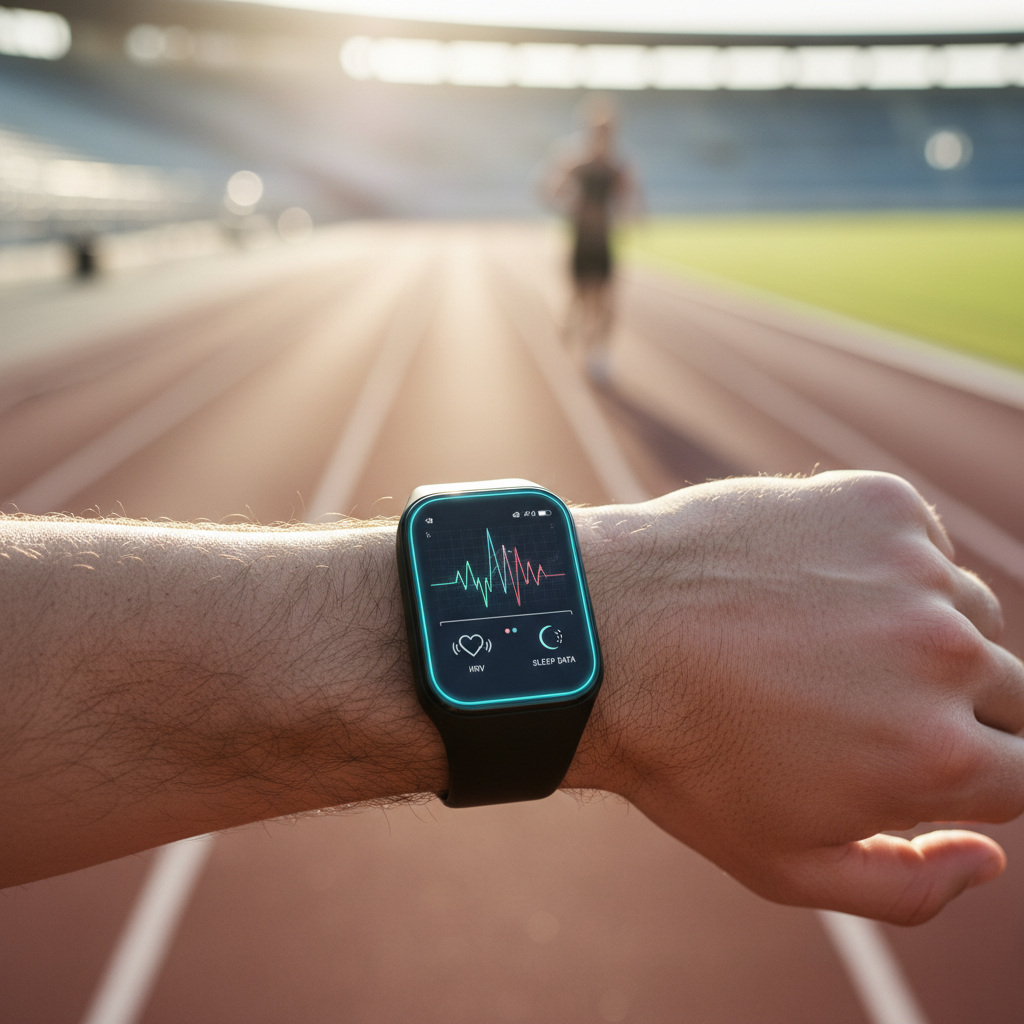
As a sports scientist, I'm often asked about the latest fitness gadget. For years, fitness trackers were little more than glorified pedometers, counting steps and estimating calories with questionable accuracy. Today, the landscape is radically different. The wearable on your wrist is a sophisticated biosensor, collecting data that was once exclusive to elite sports labs. The question is no longer *if* you should track your data, but how you can use it to train smarter.
Most users barely scratch the surface, focusing on daily step goals. But the real power of wearable technology lies in its ability to provide objective feedback on your body's recovery and readiness to perform. By understanding a few key metrics, you can move beyond generic workout plans and embrace a data-driven approach that personalizes every single training session. This isn't about replacing the fundamentals of good training; it's about enhancing them with personalized, real-time insights.
Beyond the Basics: Key Metrics That Matter
To truly leverage your wearable, you need to look past the vanity metrics of steps and calories burned. The most valuable data points are those that give you a window into your autonomic nervous system (ANS) and your state of recovery. The ANS regulates all our involuntary processes and is composed of two branches: the sympathetic ("fight or flight") and the parasympathetic ("rest and digest"). A healthy, recovered body is ableto switch between these states effectively. Here are the metrics that tell that story:
- Heart Rate Variability (HRV): This is arguably the most important metric for gauging recovery. HRV measures the millisecond variation in time between consecutive heartbeats. Contrary to what you might think, a healthy heart doesn't beat like a metronome. Higher variability is a sign that your parasympathetic nervous system is active and you are well-recovered. A consistently low HRV indicates your body is under stress—from intense training, poor sleep, illness, or life in general. Tracking the trend of your HRV is more important than any single day's number.
- Resting Heart Rate (RHR): Your RHR is a powerful indicator of your cardiovascular fitness and overall stress load. As your heart becomes stronger and more efficient through training, your RHR will generally trend downwards. However, a sudden spike in your RHR from its baseline can be an early warning sign. It might mean you haven't recovered from yesterday's workout, you're getting sick, or you're experiencing significant psychological stress.
- Sleep Quality and Stages: Sleep is the cornerstone of recovery, and modern wearables do a decent job of breaking it down. Pay attention to the time spent in each stage:
- Deep Sleep: This is when your body does most of its physical repair. Growth hormone is released, and tissues and muscles are rebuilt. If you're strength training, maximizing deep sleep is non-negotiable.
- REM Sleep: This stage is critical for cognitive function, memory consolidation, and mental recovery. Feeling mentally sharp and focused depends heavily on getting enough REM.
By monitoring these three pillars—HRV, RHR, and Sleep—you get a comprehensive picture of your body's readiness that goes far beyond how sore your muscles feel.
Translating Data into Daily Action
So you have the data. Now what? The beauty of platforms like Garmin, Whoop, and Oura is that they often distill these complex metrics into a simple, actionable "Readiness" or "Body Battery" score. This score is a composite algorithm that weighs your recent activity load against your recovery metrics to give you a daily training recommendation.
Think of it as a simple traffic light system for your training:
- High Readiness (Green): Your body is primed to perform. This is the day to push hard. If you're following one of our training programs, this is when you should tackle your most demanding session of the week. It's an ideal time to test your strength and maybe even calculate a new max using a tool like our One Rep Max Calculator. Go for that personal record, add an extra set, or increase the intensity.
- Moderate Readiness (Yellow): You're recovered enough for a productive session, but maybe not for an all-out effort. This is a day for standard training. Stick to your plan, focus on quality movement, and maintain your current volume and intensity. It's a great opportunity to perfect your form on exercises you find in our extensive exercise library.
- Low Readiness (Red): This is a crucial signal to back off. Your body is telling you it needs more time to recover. Pushing through with a hard workout on a low-readiness day is a recipe for overtraining, illness, and injury. This doesn't mean you have to be a couch potato. Opt for active recovery: a brisk walk, gentle yoga, mobility work, or foam rolling. Listening to this signal is one of the smartest things you can do for your long-term progress.
Structuring Your Training with Data
This data-driven approach allows for what's known as "autoregulation." Instead of rigidly following a pre-written plan regardless of how you feel, you adjust your daily training based on your body's objective feedback. This doesn't mean you should abandon your program; it means you apply your program intelligently.
Imagine your plan calls for a heavy squat day on Monday. If your wearable shows a low readiness score after a weekend of poor sleep and travel, blindly forcing that heavy session is counterproductive. Using autoregulation, you could swap it for Wednesday's planned active recovery session. When Wednesday rolls around and your readiness is high, you can then hit that squat session with full force. You're still getting the work in, but you're aligning it with your body's capacity, leading to better performance and faster adaptation.
The Limits and Caveats of Wearables
While I am a strong proponent of data-driven training, it's crucial to maintain perspective. Your wearable is a tool, not a guru. Here are some important caveats:
1. Data is not a substitute for intuition. The most important sensor you own is your own body. If your watch says you're 100% ready but you feel exhausted, sore, or mentally drained, listen to your body. Subjective feedback is just as valid as objective data.
2. Accuracy has its limits. Wrist-based optical heart rate sensors have improved, but they are not as accurate as an ECG chest strap, especially during high-intensity interval training or activities with a lot of wrist flexion. Focus on the trends over days and weeks rather than obsessing over a single reading.
3. Avoid "analysis paralysis." For some, tracking data can become another source of stress. If you find yourself obsessing over a single HRV point or a few minutes less deep sleep, it's time to take a step back. Use the data as a helpful guide, not a rigid set of rules that dictates your life.
Ultimately, wearable technology empowers you to take ownership of your training on a deeper level. It transforms the abstract concept of "listening to your body" into a concrete, actionable process. By decoding your data, you can ensure that every workout is productive, minimizing junk volume, reducing injury risk, and maximizing your long-term results. Before making any significant changes to your physical activity, please review our health disclaimer and PAR-Q screening and consult with a healthcare professional.