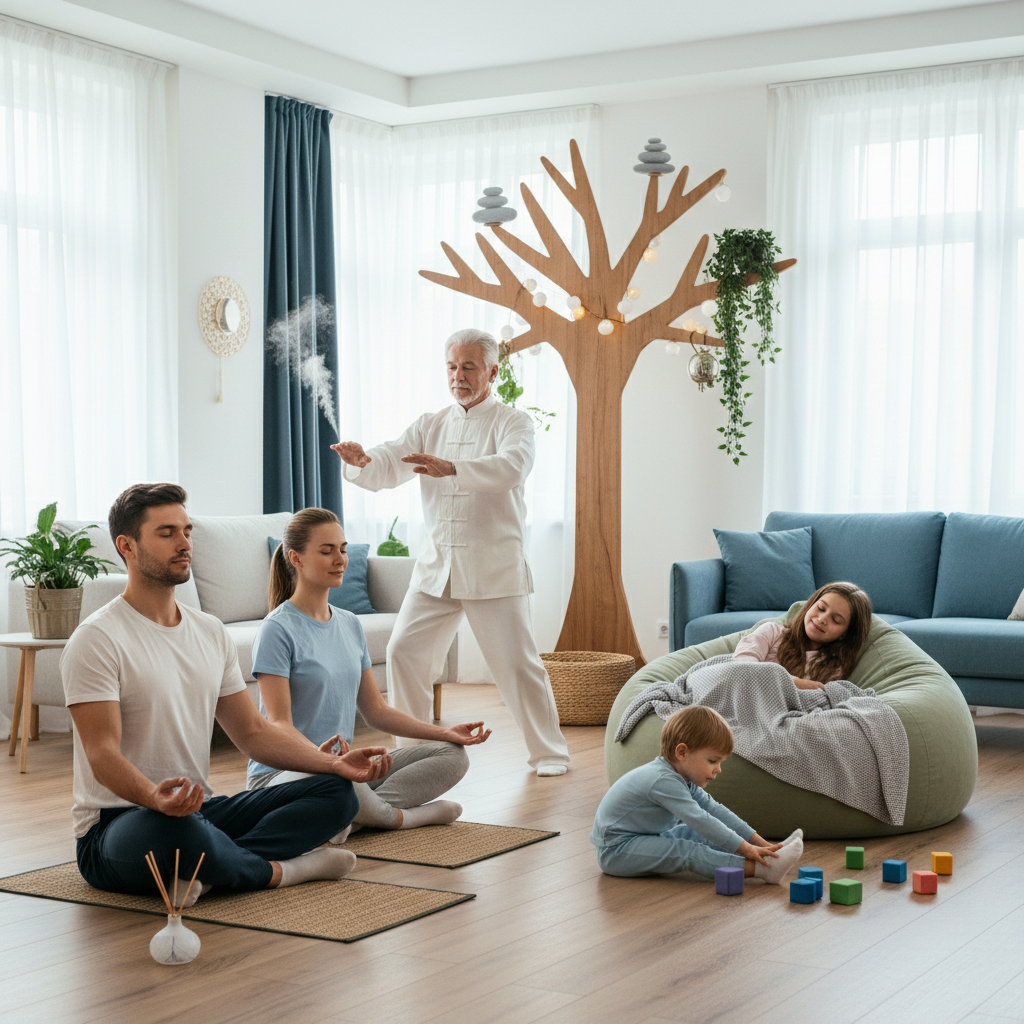
The single biggest predictor of a child's long-term health is not their school's PE program. It is not a sport. It is not a coach. It is what they see at home, every day. Children of active parents become active adults. It really is that simple.
Building a "training family" does not mean turning your living room into a CrossFit box. It means weaving movement, real food, and shared rituals into the texture of daily life — so they feel normal, not forced.
Why Family-Wide Fitness Matters More Than You Think
Modern life is engineered against movement. Screens, cars, delivery food, endless sitting. Kids today move dramatically less than the generation before them — and parents are not far behind. The cost is not "looking out of shape." The cost is metabolic disease, anxiety, poor sleep and a shorter healthy lifespan for everyone in the house.
A healthy home flips the default: movement becomes the easy choice, not the rare one.
Step 1 — Be the Example, Not the Lecture
Kids absorb what they see, not what they are told. If a parent trains 3 times a week, talks about food positively, walks after dinner, sleeps on time — the child internalizes that as normal life. No nagging required. Start with your own consistency before worrying about anyone else's.
Step 2 — Create Shared Movement Rituals
Small, repeatable, enjoyable. A few ideas that work in real families:
- Saturday morning walk or hike — non-negotiable, no phones
- 10-minute "family workout" a couple of evenings per week — bodyweight only, everyone joins
- After-dinner walk — devastating for metabolic health (in a good way)
- One shared sport or activity — bike rides, swimming, paddle, tennis, anything
Pick something everyone genuinely enjoys. Misery is not contagious — fun is.
Step 3 — Use Workouts That Work for Mixed Ages
You can't put a 9-year-old through a heavy strength session — but you can absolutely share bodyweight micro-workouts, mobility flows, and short circuits. Our workout library includes plenty of low-intensity, equipment-free options that work for the whole household. Adults can scale up; kids can scale down.
Step 4 — Build a Real-Food Kitchen
You do not need to be a nutritionist. You need three rules:
- Protein at every meal (eggs, fish, meat, dairy, legumes)
- Vegetables and fruit visible on the counter, junk food not in the house
- Cook together at least twice a week — kids who help cook eat better for life
Use the Calorie Calculator and BMR Calculator to anchor adult portions, but stop counting around the kids. Teach quality, not numbers.
Step 5 — Protect Sleep Like It's the Family Treasure
Sleep is the most under-rated family wellness lever. Consistent bedtimes for kids and parents, no screens an hour before bed, dark cool bedrooms. A well-slept family fights less, eats better and trains harder. This single change transforms households.
Step 6 — Anchor It with a Daily Ritual
Big plans collapse. Small daily rituals don't. Our Daily Smarty Ritual is designed exactly for this — a short, repeatable anchor that keeps the household tuned in to its own health on the busiest of weeks.
Step 7 — Choose a Structured Program for the Adults
Parents need their own training, not just family activities. A structured training program gives Mom and Dad real strength, energy and confidence — which then ripples through the entire home. Strong parents raise strong kids. Tired parents raise tired kids.
The Real Reason This Matters
You are not just building a "fit family." You are building the baseline of normal that your children will carry for the next 60 years of their lives. That is one of the most valuable things any parent can give. It costs nothing and pays compound interest forever.
Before starting a new family training routine, please review our health disclaimer and PAR-Q screening, especially for adults who have been inactive.