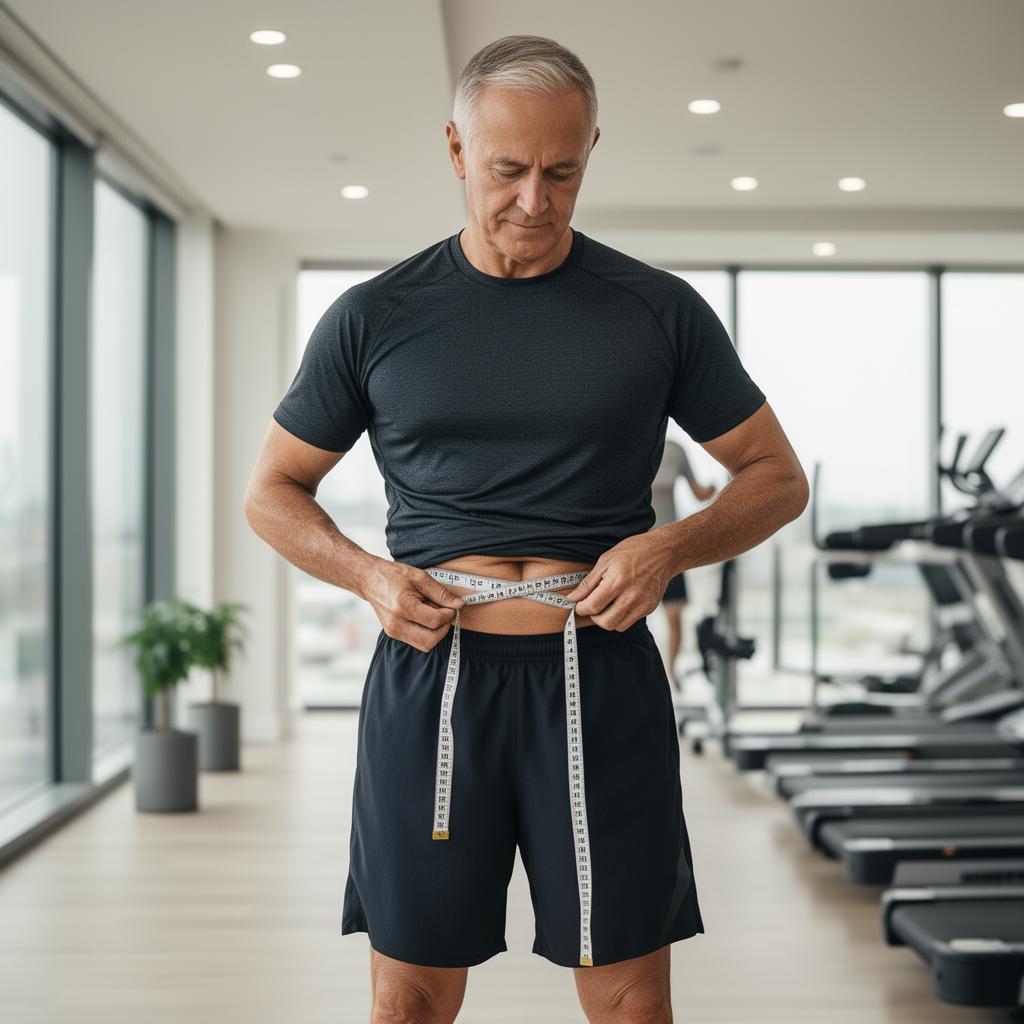
If you are a man over fifty staring down at a belly that did not exist in your forties, you are not lazy and you are not broken. You are dealing with a completely different body than the one that used to respond to a few weeks of "eating clean and running more." As a Sports Scientist with more than two decades of coaching, I can tell you that almost every man over 50 who loses belly fat for good does the opposite of what mainstream advice recommends. This is the protocol that actually works.
Why Belly Fat Behaves Differently After 50
The fat sitting around your waistline after 50 is mostly visceral fat — the metabolically active fat wrapped around your organs. It is the most dangerous fat in the human body, strongly linked to type 2 diabetes, cardiovascular disease, and all-cause mortality (Lancet, 2022). Four things change after 50 that almost guarantee it will accumulate unless you intervene:
- Testosterone drops roughly 1% per year after 30, accelerating after 50. Lower testosterone means less muscle, more abdominal fat storage, and worse insulin sensitivity.
- Insulin resistance rises, so the same carbs you ate at 35 now spill into fat storage instead of muscle glycogen.
- Cortisol patterns flatten, keeping evening cortisol higher and driving visceral fat deposition specifically around the midsection.
- Sarcopenia begins — you lose 3–8% of muscle per decade. Less muscle means a lower resting metabolic rate and less glucose disposal capacity.
Translation: you cannot out-cardio your hormones. You have to rebuild the system that burns fat, not just burn calories in the moment.
The 4-Pillar Protocol
Pillar 1 — Strength Training First, Always
This is the single highest-leverage intervention for a man over 50. Heavy, structured resistance training raises testosterone, improves insulin sensitivity for up to 48 hours per session, rebuilds the muscle you have been quietly losing, and turns your body back into a glucose-burning machine. Cardio cannot do any of this.
The prescription is simple: 3 full-body strength sessions per week, focused on compound movements — squats, hinges, presses, pulls, carries. Sets in the 4–8 rep range, taken close to but never to failure. Rest 2–3 minutes between heavy sets. Pick a structured plan from the training programs library rather than guessing your way through random sessions — at 50+, programming matters more than effort.
Pillar 2 — Walking and NEAT, Not Endless Cardio
The mistake I see most often is men over 50 throwing themselves into long runs or daily HIIT to "burn the belly off." This raises cortisol, eats muscle, and drives appetite. The research is unambiguous: NEAT (Non-Exercise Activity Thermogenesis) — daily walking, standing, taking the stairs — accounts for a far larger share of fat loss than structured cardio (Mayo Clinic, 2023).
The target is 7,000–9,000 steps per day. The mortality curve flattens around 8,000 steps, so you do not need 15,000 (JAMA, 2023). Walk after meals — even 10 minutes drops post-meal glucose by 12–22%. Use one of the structured workout library sessions on training days and walking on the rest.
Pillar 3 — Protein, Fiber, and a Realistic Deficit
Belly fat will not disappear in a calorie surplus, but the way you create the deficit matters even more after 50. Three non-negotiable rules:
- Protein: 1.6–2.2 g per kg of body weight per day. This protects muscle in the deficit and is the most satiating macronutrient by a wide margin.
- Fiber: 30–40 g per day. Drives satiety, improves insulin sensitivity, and feeds the gut bacteria associated with lower visceral fat.
- Moderate deficit: 15–20% below maintenance, never more. Aggressive deficits at 50+ destroy testosterone, sleep, and muscle in weeks.
Calculate your numbers precisely with the Calorie Calculator and split them into macros with the Macro Calculator. Guessing at this age is the fastest way to plateau.
Pillar 4 — Sleep and Stress Are Not Optional
One night of 5-hour sleep drops insulin sensitivity by ~25% and raises evening cortisol the next day (Annals of Internal Medicine). Chronically under-slept men store fat preferentially in the abdomen, even at the same calorie intake. The prescription:
- 7.5–8 hours in bed, consistent wake time, dark and cool room.
- No screens 60 minutes before bed — blue light suppresses melatonin sharply after 50.
- 10 minutes of slow nasal breathing in the evening to lower sympathetic tone.
What to Stop Doing Immediately
- Crash diets and "30-day cleanses." They strip muscle, crater testosterone, and rebound within months.
- Daily long-duration cardio. It is a stress dose without a strength dose. You will look softer at the same scale weight.
- Late-night eating. Insulin sensitivity is roughly half at 10 PM compared to 10 AM. Front-load your calories.
- Alcohol every evening. Even moderate intake blunts overnight fat oxidation and disrupts deep sleep.
- "Just doing more." At 50+, recovery is the limiting factor, not effort.
A Realistic Timeline
Honest expectations protect you from quitting. Here is what a man over 50 following this protocol consistently should expect:
- Weeks 1–2: Sleep improves, energy stabilizes, waist drops 1–2 cm from reduced inflammation and glycogen shifts.
- Weeks 3–6: Visible strength gains, clothes fit better, waist drops another 2–3 cm. Scale may barely move — this is muscle replacing fat.
- Months 2–4: 4–7 kg of fat loss, noticeable abdominal change, blood markers (fasting glucose, triglycerides, HDL) improve significantly.
- Months 4–6: The body composition you actually wanted. Sustainable, not rebounding.
Track waist circumference and morning energy, not just the scale. Both move long before the number on the scale does.
The Closing Truth
Belly fat after 50 is not a curse. It is a signal that your body is running on outdated programming. Rebuild muscle, walk daily, eat enough protein, sleep like it is a job, and the belly will follow — not the other way around. If you want my full philosophy on training and aging well, read about my coaching approach and start with one structured program rather than another random month of trying harder.
You are not too old. You are training for the wrong era of your body. Fix that, and the next 30 years can be the leanest, strongest decades of your life.