When it comes to building a high-performance physique, the squat is often heralded as the king of all exercises. However, jumping straight into a heavy barbell back squat without mastering the fundamentals is a recipe for injury and plateaus. At SmartyGym, we advocate for a ‘mechanics first’ approach to training. This is where the goblet squat enters the frame. Often dismissed as a beginner’s move, the goblet squat is actually a sophisticated tool for developing core stability, posterior chain activation, and perfect hip kinematics.
The Biomechanics of the Anterior Load
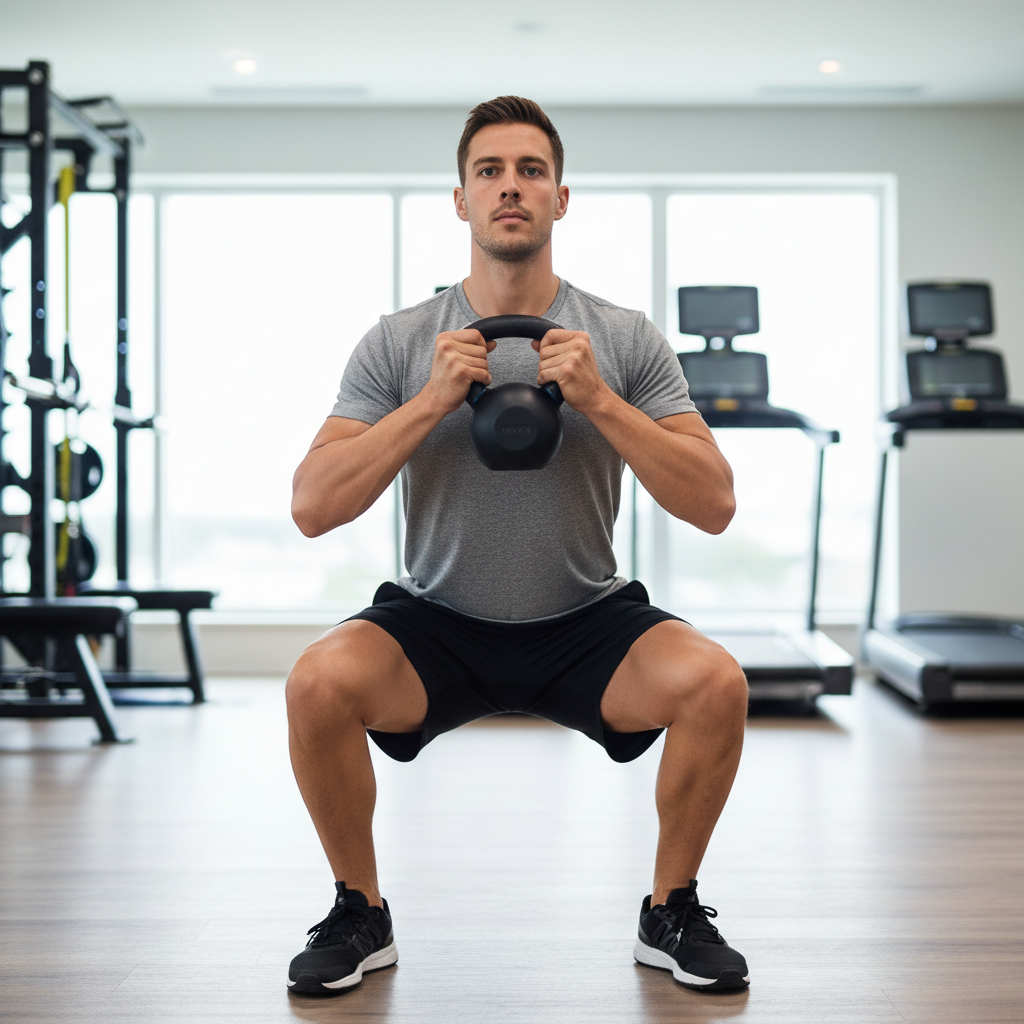
The primary differentiator of the goblet squat is the placement of the load. By holding a weight against your chest, you shift your center of mass forward. This anterior loading naturally encourages a more upright torso and allows the hips to drop between the heels with greater ease. Unlike the back squat, which places high compressive forces on the lumbar spine, the goblet squat engages the anterior core to counterbalance the weight, making it a safer and more effective alternative for those developing their structural integrity.
Scientific studies on squat variations suggest that anteriorly loaded squats increase quadriceps activation while reducing the shear stress on the lower back. This makes it an essential staple in our training programs for athletes of all levels. Whether you are a novice or a seasoned lifter, the feedback provided by a front-loaded kettlebell or dumbbell is unmatched for correcting common movement faults like ‘the butt wink’ or excessive forward lean.
Perfecting Your Technique: A Step-by-Step Guide
To reap the full metabolic and hypertrophic benefits of this movement, execution must be precise. Follow these cues to optimize your form:
- The Setup: Hold a dumbbell or kettlebell against your sternum. Your elbows should be tucked in, pointing toward the floor. Stand with your feet slightly wider than shoulder-width, with toes flared out 15 to 30 degrees.
- The Descent: Initiate the movement by hingeing slightly at the hips and then immediately bending the knees. Think about sitting ‘down’ rather than sitting ‘back.’ Your elbows should track inside your knees as you descend.
- The Bottom Position: Aim for a depth where your thighs are at least parallel to the floor, provided you can maintain a neutral spine. Your elbows can serve as a guide; if they graze the inside of your vastus medialis, you are hitting the ideal depth.
- The Ascent: Drive through the mid-foot, keeping your chest tall. Exhale as you return to a standing position, squeezing your glutes at the top.
For a visual breakdown of similar movements, you can browse through our comprehensive exercise library to ensure your proprietary form matches professional standards.
From Goblet Squat to Global Strength
Once you have mastered the basic goblet squat, the journey toward elite strength continues through progressive overload. The beauty of this exercise lies in its versatility. You can increase the stimulus by adjusting several variables beyond just the weight on the ‘bell.’
Advanced Progressions and Variations
If you find that your dumbbell rack has reached its limit, or you are looking to challenge your nervous system, consider these progressions:
- Tempo Goblet Squats: Slow down the eccentric (lowering) phase to 3-5 seconds. This increases time under tension and builds incredible connective tissue strength.
- The 1.5 Rep Squat: Go all the way down, come up halfway, go back down, and then stand up fully. This variation is a metabolic powerhouse for hypertrophy.
- Pause Squats: Hold the bottom position for 3 seconds. This removes the stretch-reflex, forcing your muscles to generate maximum force from a dead stop.
As you transition into higher loads and more complex variations, it’s vital to track your progress. Understanding your strength floor and ceiling is easier when you utilize our One Rep Max Calculator to estimate your potential across various resistance levels. Remember that while the goblet squat is generally safer than the barbell squat, you should always consult our health disclaimer and PAR-Q screening before attempting a new high-intensity protocol.
Programming the Goblet Squat for Success
How you integrate the goblet squat depends on your specific goals. For fat loss and conditioning, we often program it in high-repetition circuits (15–20 reps) to keep the heart rate elevated. For pure strength and hypertrophy, a range of 8–12 reps with the heaviest manageable weight is the ‘sweet spot.’
As a sports scientist, I often see lifters rush toward the squat rack before they have earned the right to load their spine. The goblet squat is your ‘license’ to lift heavy. It builds the requisite ankle mobility, thoracic extension, and hip drive necessary for life-long fitness. By treating this movement with the respect it deserves, you aren’t just building bigger legs—you are building a bulletproof foundation for every other movement in the gym.