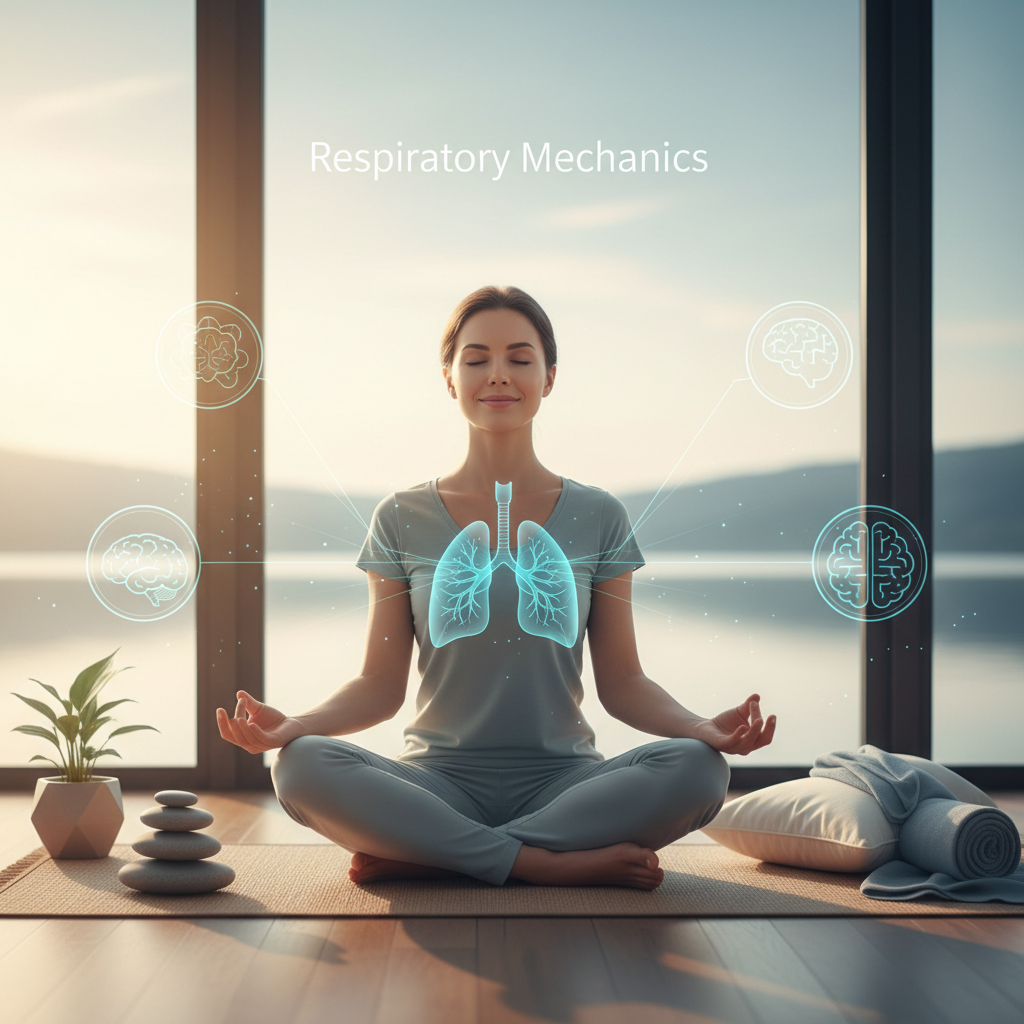
In the world of high-performance athletics, we obsess over macro-distributions, mechanical tension, and progressive overload. Yet, we often overlook the most fundamental physiological process occurring during every rep: respiration. Breathing is not merely a passive delivery system for oxygen; it is a mechanical and chemical lever that dictates your heart rate variability, core stability, and local muscular endurance. By shifting our perspective from breathing as a reflex to breathing as a skill, we can unlock a new echelon of physical and mental resilience.
The Physiology of Gas Exchange and Performance
To understand the power of breath, we must look at the Bohr Effect. This physiological phenomenon describes how hemoglobin's oxygen binding affinity is inversely related to both acidity and the concentration of carbon dioxide (CO2). Paradoxically, if you breathe too rapidly and 'off-gas' too much CO2, your hemoglobin holds onto oxygen more tightly, preventing it from being released into the working muscle tissues. This leads to premature fatigue and a decline in power output.
At SmartyGym, we emphasize that elite performance is as much about CO2 tolerance as it is about oxygen intake. By training the body to handle higher systemic concentrations of carbon dioxide, you can sustain higher intensities for longer durations before reaching your anaerobic threshold. This concept is integrated into many of our advanced training programs to ensure your metabolic engine is as efficient as your muscular one.
Diaphragmatic Loading and Spinal Stability
Beyond the chemical exchange, breathing plays a critical structural role. The diaphragm is not just a respiratory muscle; it is a primary stabilizer of the lumbar spine. Proper diaphragmatic breathing creates intra-abdominal pressure (IAP), which acts as an internal 'weight belt' to protect the spine during heavy compound lifts. Many athletes default to chest breathing, which utilizes secondary respiratory muscles like the scalenes and upper trapezius, leading to chronic neck tension and inefficient force transfer.
- Structural Integrity: Proper IAP reduces shear force on the vertebral discs.
- Energy Conservation: Using the diaphragm reduces the metabolic cost of breathing.
- Autonomic Regulation: Controlled deep breathing signals the nervous system to remain calm under physical duress.
To begin mastering this, you can explore various technique tutorials in our workout library, where we break down the bracing sequence for maximum safety and power.
Nasal Breathing: The Filter of the Elite
One of the most effective ways to improve respiratory efficiency is through the adoption of nasal breathing. The nasal passages are designed to warm, humidify, and filter air, but more importantly, তারা facilitate the release of Nitric Oxide (NO). Nitric Oxide is a potent vasodilator, meaning it helps widen blood vessels to improve oxygen delivery throughout the body.
Switching to nasal-only breathing during low-to-moderate intensity steady-state exercise forces the body to adapt to higher CO2 levels and improves the efficiency of the aerobic system. While it may feel restrictive initially, the long-term adaptations include a lower resting heart rate and improved recovery times between high-intensity intervals. We recommend integrating 10 minutes of nasal-only work into your Daily Smarty Ritual to build this habit sustainably.
Stress Resilience and Cognitive Recovery
Respiratory mechanics provide a direct 'hack' into the Autonomic Nervous System (ANS). By manipulation of the exhalation phase—specifically making it longer than the inhalation—we stimulate the vagus nerve. This triggers the parasympathetic nervous system, effectively acting as a brake on the 'fight or flight' response. This is essential for modern professionals who face high-stress environments and need to transition from a high-arousal state to a recovery state quickly.
Implementing box breathing (four seconds in, four seconds hold, four seconds out, four seconds hold) or 4-7-8 breathing can dramatically lower cortisol levels following a strenuous session. This 'Emotional Fitness' isn't just about feeling better; it's about reducing the systemic inflammation that cortisol can induce, thereby accelerating tissue repair and cognitive clarity.
Practical Implementation and Safety
The journey to mastering your breath is a marathon, not a sprint. It requires consistent, conscious practice during both rest and exertion. It is vital to remember that while respiratory training is powerful, it must be performed safely. Before commencing any high-intensity breath-work or new physical regimen, please consult our health disclaimer and PAR-Q screening to ensure you are cleared for exercise.
As a sports scientist, I have seen that the difference between an athlete who plateaus and one who prospers is often found in the invisible metrics. By focusing on the mechanics of your breath, you are not just exercising; you are optimizing the very foundation of your biology. For more deep dives into the science of wellness, feel free to browse our other blog articles.