
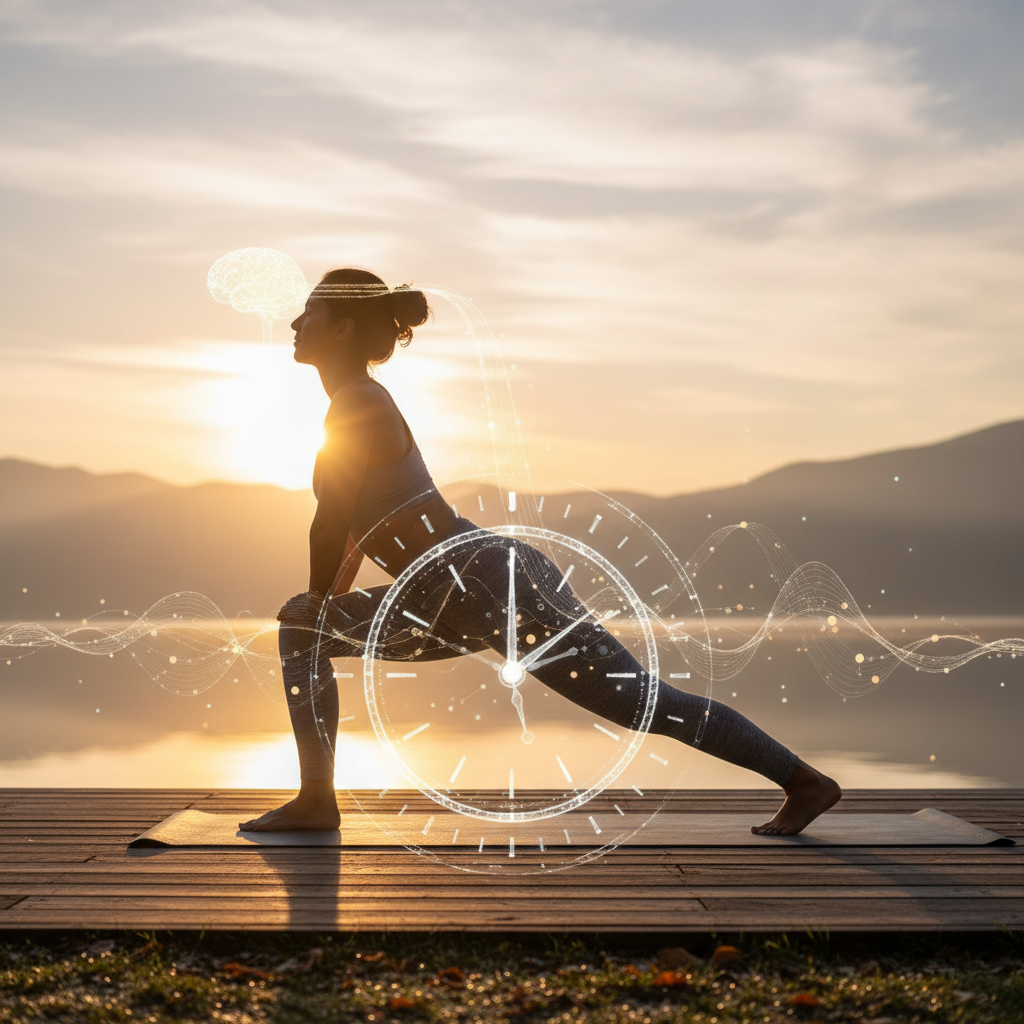
The Rhythm of Resilience
In our relentless pursuit of peak performance, we optimize our nutrition, fine-tune our training, and track every conceivable metric. Yet, many of us still feel perpetually stressed, running on fumes, and emotionally fragile. We feel "wired and tired," struggling to summon the energy for a workout or the focus for a deep work session. What if the missing piece isn't another supplement or a more intense workout, but something far more fundamental? What if the key to unlocking robust, sustainable resilience lies in the timing of your daily actions?
This is the core principle of what I call Chrono-Resilience: the practice of aligning your lifestyle with your innate biological rhythms to build a stronger, more adaptable stress response system. Your body doesn't just have one clock; it has a master clock in the brain and trillions of peripheral clocks in every organ and cell. When these clocks are synchronized, your physiology works like a finely tuned orchestra. When they're not, it's chaos—and that chaos manifests as chronic stress, fatigue, and burnout.
Your Master Clock and the Stress Cascade
Deep within your brain's hypothalamus lies the Suprachiasmatic Nucleus (SCN). Think of the SCN as the master conductor of your biological orchestra. Its primary job is to keep your body in sync with the 24-hour light-dark cycle of the environment. The most powerful signal, or zeitgeber (German for "time-giver"), for the SCN is light.
One of the SCN's most critical functions is governing the Hypothalamic-Pituitary-Adrenal (HPA) axis—your central stress response system. It dictates the daily rhythm of cortisol, your primary stress hormone. A healthy circadian rhythm produces a robust cortisol peak within 30-60 minutes of waking, which promotes alertness and mobilizes energy. Throughout the day, cortisol levels should gradually decline, reaching their lowest point at night to allow for rest and recovery.
When our lifestyle choices (late-night screen time, erratic meal schedules, inconsistent sleep) disrupt our circadian rhythm, this cortisol curve becomes dysfunctional. You might experience a blunted morning peak, leaving you groggy and unmotivated, or elevated cortisol at night, causing racing thoughts and poor sleep. This chronic misalignment places an enormous strain on your system, eroding your ability to handle life's challenges and paving the way for what we call allostatic overload. Building Chrono-Resilience is about restoring this natural, powerful rhythm.
The Four Pillars of Circadian Alignment
Synchronizing your internal clocks doesn't require expensive gadgets or extreme protocols. It's about consciously timing four key inputs your body uses to set its daily rhythm. Mastering these pillars will create a powerful foundation for both physical and mental fortitude.
- Pillar 1: Light Exposure. Light is the most potent signal for your master clock. Aim for 10-30 minutes of direct, natural sunlight exposure as soon as possible after waking. This single act anchors your entire 24-hour cycle, signaling the start of the active phase and initiating the countdown for melatonin release about 16 hours later. Conversely, minimize bright, overhead, and blue-spectrum light in the 2-3 hours before bed. This "digital sunset" signals to your brain that the day is ending, facilitating the transition to sleep.
- Pillar 2: Movement Timing. Exercise is a powerful non-photic zeitgeber. A morning workout can further reinforce your wake-up signal and enhance the beneficial morning cortisol pulse. Training in the afternoon often aligns with your body's peak core temperature and strength output, making it an ideal window for performance. While any movement is better than none, be mindful of high-intensity training late at night, as it can raise core body temperature and cortisol, potentially delaying sleep onset for some individuals. Our training programs are designed to be adaptable to your schedule for maximum benefit.
- Pillar 3: Nutrient Schedule. Your digestive system, liver, and pancreas have their own clocks. When you eat, you signal to these metabolic clocks that it's the "active" part of the day. Consuming your calories within a consistent 8-12 hour window (a form of time-restricted eating) reinforces your primary circadian rhythm. This helps improve metabolic flexibility and insulin sensitivity. Try to consume your last meal at least 2-3 hours before bedtime to allow your digestive system to rest overnight.
- Pillar 4: Temperature Fluctuation. Your core body temperature naturally follows a circadian rhythm, peaking in the late afternoon and dropping to its lowest point during sleep. You can leverage this by intentionally creating temperature contrast. For example, a warm bath or shower 90 minutes before bed can help trigger this drop by pulling blood to the surface of your skin (vasodilation), which then radiates heat away and lowers your core temperature, signaling your body it's time for sleep.
Building Your Daily Chrono-Resilience Blueprint
Theory is one thing; practice is everything. Here is a sample blueprint for structuring your day to build Chrono-Resilience. This is a template, not a rigid prescription. The key is consistency, especially with your wake-up time.
- Morning (6-9 AM): Wake up at the same time each day (even on weekends). Immediately get 10+ minutes of sunlight. Hydrate. This is the perfect time to engage in your Daily Smarty Ritual to set a powerful intention for the day.
- Mid-Day (12-3 PM): Your cognitive function and alertness are high. This is an ideal time for demanding tasks. Have a protein-rich lunch to sustain energy without a major crash.
- Afternoon (3-6 PM): Your body temperature and physical performance capacity peak. This is an excellent window for your most strenuous workout session.
- Evening (7-10 PM): Finish your last meal. Begin to dim the lights in your environment. Reduce or eliminate screen time. Engage in relaxing activities like reading, stretching, or journaling.
- Night (10 PM onward): Keep your bedroom as dark, cool, and quiet as possible. This is sacred time for the recovery and regeneration that underpins all daytime performance.
Remember, life happens. You won't be perfect every day. The goal is not perfection, but a consistent effort to provide your body with the clear, rhythmic signals it needs to thrive. For more in-depth strategies on wellness and performance, you can explore our other blog articles.
Before beginning any new fitness or wellness protocol, it's essential to consult with a healthcare professional. You can review our health disclaimer and PAR-Q screening to ensure you're ready for your fitness journey. True resilience isn't about pushing through exhaustion; it's about creating a physiological state that makes you robust, adaptable, and ready for any challenge. By synchronizing your clocks, you are building that state from the ground up, every single day.