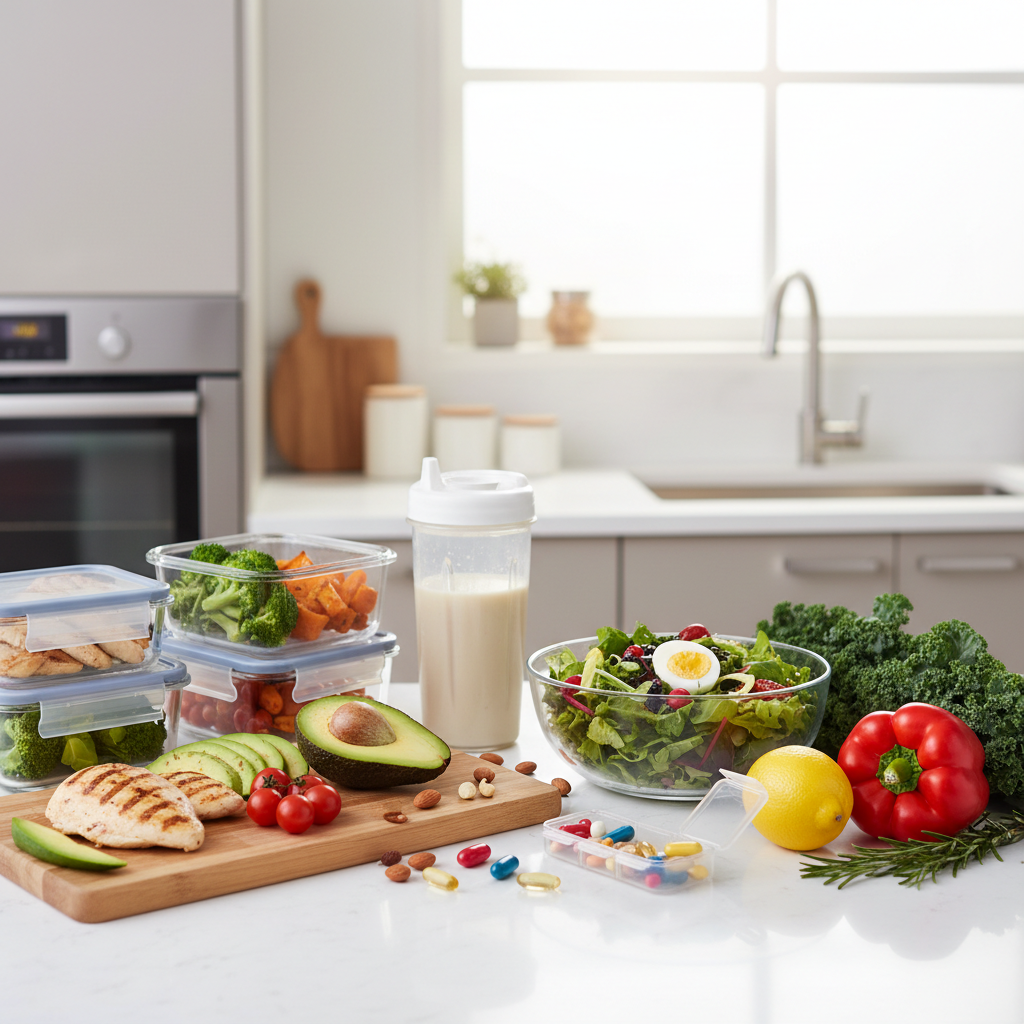
Protein is the most argued-about nutrient on the internet — and one of the most misunderstood. Half the population is told they are eating too much, the other half is told it is not enough, and the official government recommendation has not been seriously updated in decades. As a Sports Scientist, I can tell you plainly: most adults — especially after 35 — are dramatically under-eating protein, and that single deficit silently sabotages their training, recovery, body composition, and long-term independence.
The RDA Lie Almost Everyone Still Believes
The official RDA is 0.8 g of protein per kilogram of body weight per day. That number was never designed to make you strong, lean, or athletic. It was set as the minimum needed to prevent deficiency in a sedentary adult — the nutritional equivalent of saying "the minimum income to not starve." It was never an optimal target, and the research community has known this for over 20 years.
Modern protein research — from Phillips, Helms, Morton, Aragon, and others — consistently shows that active adults need 1.6 to 2.2 g per kg of body weight to maximize muscle protein synthesis, recovery, and lean mass retention. That is two to three times the RDA.
What Protein Actually Does (That Carbs and Fat Cannot)
- Triggers muscle protein synthesis via leucine — the only macronutrient that does this.
- Preserves lean mass during fat loss — the single biggest predictor of whether a diet leaves you toned or skinny-fat.
- Has the highest thermic effect — roughly 25–30% of protein calories are burned just digesting it.
- Increases satiety more than any other macronutrient — making sustainable eating actually possible.
- Fights sarcopenia — age-related muscle loss that begins quietly in your 30s and accelerates after 50.
If you are dialing in your numbers, the BMR Calculator gives you your metabolic floor and the Calorie Calculator turns that into actual daily targets where protein should land first, before anything else gets allocated.
The Real Numbers — Per Goal
- Sedentary adult, general health: 1.2–1.6 g/kg/day. Already higher than the RDA.
- Active adult / recreational lifter: 1.6–2.0 g/kg/day.
- Fat loss phase (in a calorie deficit): 2.0–2.4 g/kg/day to protect muscle.
- Adults over 50: 1.8–2.2 g/kg/day — the data on aging is brutally clear.
- Serious strength or hypertrophy athlete: 2.0–2.2 g/kg/day, no benefit beyond.
A practical rule of thumb: 2 grams of protein per kilogram of body weight covers almost everyone reading this. For a 75 kg adult, that is 150 g per day — roughly 30–40 g across four meals.
The Biggest Mistakes Everyone Makes
- Eating most of their protein at dinner. Muscle protein synthesis runs in 3–5 hour windows. Stack one giant meal and you waste the rest of the day. Spread it across 3–5 meals.
- Confusing "high protein" food with high protein. A Greek yogurt is not 30 g. Read labels and weigh portions.
- Ignoring leucine. Each meal should hit ~2.5–3 g leucine — roughly 25–35 g of complete protein from animal or well-combined plant sources.
- Believing the kidney-damage myth. Higher protein intake does not damage healthy kidneys. This has been studied repeatedly and the claim refuses to die.
- Skipping protein at breakfast. Cereal-and-toast breakfasts are the single biggest reason people fall short.
How to Actually Hit the Number
You cannot wing 150–180 g of protein. You have to engineer it. Anchor every meal with a protein source — eggs, Greek yogurt, fish, chicken, lean beef, cottage cheese, tofu, tempeh, lentils with rice. Use whey or casein only to fill the gap, not as the foundation. Build the protein first, then add carbs and fats around it. For a daily structure that makes hitting the number automatic, the Daily Smarty Ritual walks you through the exact rhythm — meals, training, recovery, hydration — that high-performing adults use.
If you are also building strength or running a structured plan, browse the training programs — the nutrition stops working without the stimulus.
The Bottom Line
The official RDA is a survival number, not a performance number. If you train, age, or care about how you look and move in 20 years, your protein target is roughly double what the package on your cereal box implies. Eat protein at every meal, spread it across the day, hit the leucine threshold, and stop fearing the dose. This is the single highest-leverage nutritional change most adults can make — and almost nobody actually does it.