In the realm of physique development and functional performance, few muscle groups are as misunderstood as the gluteus maximus. While social media is flooded with influencers performing endless repetitions of 'cable kickbacks' and 'rainbows,' the actual biomechanics of gluteal hypertrophy are rooted in high-tension mechanical loading and specific ranges of motion. As a sports scientist with two decades in the field, I’ve seen countless athletes plateau because they prioritize 'the burn' over the physiological drivers of muscle growth.
The Anatomy of Power: Understanding the Gluteal Complex
The glutes are not a single muscle but a complex comprising the gluteus maximus, medius, and minimus. To achieve what we call 'functional aestheticism,' your training must account for the primary functions of these muscles: hip extension, hip abduction, and external rotation. The gluteus maximus is predominantly composed of fast-twitch muscle fibers, meaning it responds best to heavy loading and explosive movements rather than high-repetition, low-load endurance work.
According to the size principle of motor unit recruitment, your body recruits smaller, slow-twitch fibers first. To tap into the high-threshold motor units of the glutes, you must move toward mechanical failure using significant resistance. You can find detailed breakdowns of these movement patterns in our comprehensively curated exercise library.
The Big Three: Science-Backed Exercises That Actually Work
Research consistently shows that not all glute exercises are created equal. To maximize growth, we must select movements that provide a high level of electromyographic (EMG) activity while allowing for long-term progressive overload.
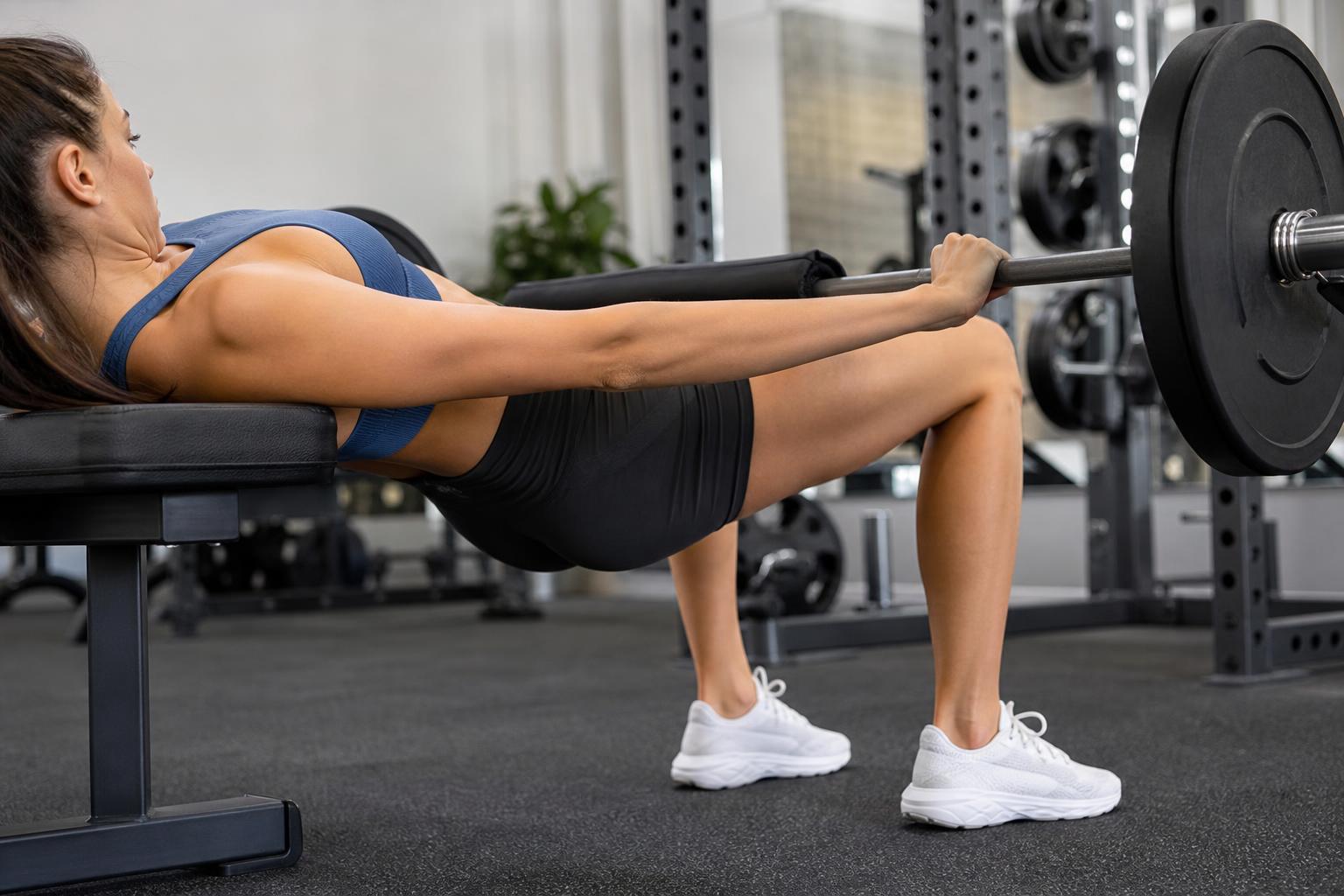
- The Barbell Hip Thrust: Widely considered the gold standard for glute isolation, the hip thrust places the muscle under peak tension in the shortened position (the top of the movement). Studies by Bret Contreras and colleagues have demonstrated superior gluteus maximus activation in the hip thrust compared to the back squat.
- Deficit Reverse Lunges: Unlike forward lunges, which can become quad-dominant, the reverse lunge allows for a more vertical shin angle and a greater stretch on the gluteal fibers. By performing these from a small deficit, you increase the range of motion, leading to greater muscle damage and subsequent repair.
- The Romanian Deadlift (RDL): This movement targets the glutes in the lengthened position. By focusing on the hip hinge and maintaining a slight knee bend, you place the gluteus maximus under extreme eccentric stress, a primary driver of hypertrophy.
Before jumping into a heavy lifting session, it is vital to ensure you are medically cleared for strenuous activity; please review our health disclaimer and PAR-Q screening to prioritize your safety.
Programming for Hypertrophy: Volume and Intensity
One of the most common mistakes I see in the gym is 'program hopping.' To see real physiological changes in muscle cross-sectional area, you must stick to a structured routine for at least 8 to 12 weeks. Optimal glute growth typically requires a frequency of 2 to 3 times per week, allowing for 48 to 72 hours of recovery between sessions. This frequency ensures that muscle protein synthesis remains elevated throughout the week.
Intensity is the second pillar. If you are not training within 1-3 repetitions of technical failure, you are likely leaving gains on the table. To accurately gauge your intensity and ensure you are lifting enough weight to stimulate the high-threshold motor units, use our One Rep Max Calculator to set your training percentages accurately.
The Role of Mind-Muscle Connection and Biomechanics
While the 'mind-muscle connection' was once dismissed as 'bro-science,' modern research in internal versus external attentional focus suggests that consciously 'squeezing' the target muscle can increase EMG activity during low-to-moderate intensity exercises. During a hip thrust, focusing on driving through the heels and posteriorly tilting the pelvis at the top of the rep can significantly increase gluteal involvement while sparing the lower back.
Furthermore, the length-tension relationship of the muscle must be respected. The glutes are strongest when the hip is near full extension. This is why movements like the squat, though excellent for overall leg development, often fail to maximize glute growth because the hardest part of the lift (the 'sticking point' at the bottom) occurs when the glutes are in a disadvantaged, stretched position.
Putting It All Together: Your Glute Growth Protocol
Building a powerful posterior chain requires a combination of heavy compound movements and targeted isolation. A sample effective session might look like this:
- Primary Move: Barbell Hip Thrust (3 sets of 8-10 reps) - Focused on peak contraction.
- Lengthening Move: Romanian Deadlift (3 sets of 10-12 reps) - Focused on the eccentric stretch.
- Unilateral Move: Deficit Reverse Lunge (3 sets of 12 reps per leg) - To address bilateral imbalances.
- Accessory Move: Seated Hip Abduction (3 sets of 15-20 reps) - To target the gluteus medius and minimus.
Consistency is the final ingredient. The biological blueprint for growth is not written overnight; it is the result of thousands of repetitions performed with perfect form and incremental increases in load. If you are ready to take the guesswork out of your routine, explore our scientifically designed training programs tailored to your specific goals and experience level.